
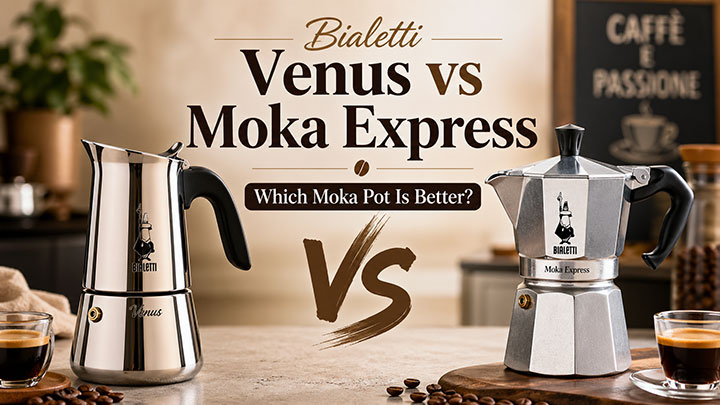
If you are deciding between a Bialetti Venus and the classic Moka Express, you are in the right place. [Bialetti Venus vs Moka Express] is a common showdown in home‑coffee circles, especially as more kitchens shift to induction burners and clean‑looking stainless steel gear.
Many people struggle with burnt‑tasting coffee, pots that leak steam, or moka pots that simply will not work on their stove. Both models brew strong, espresso‑style coffee, but they solve these problems in different ways and suit different lifestyles. By the end of this comparison, you will know which one fits your kitchen, your taste, and your budget—plus which should be the clear winner.
Side‑by‑Side Comparison Table
Detailed Review of Bialetti Venus
The Bialetti Venus is Bialetti’s modern update on the classic stovetop espresso pot, built from 18/10 stainless steel rather than aluminum. It keeps the same three‑chamber layout the brand is known for: a water chamber, a metal filter basket, and a top cup section. The Venus has a gentle, rounded silhouette and a slightly thicker boiler wall, which helps it handle heat cycles more evenly and reduces the risk of scorching the coffee.
In daily use, the Venus feels like an upgraded piece of kitchen hardware. It works well on gas, electric, and especially induction stoves, where the classic Moka Express cannot operate without an adapter plate. The stainless construction makes it resistant to pitting and discoloration, so it keeps its shiny look even after years of regular use. The handle is comfortable to hold, and the pressure‑release valve is easy to clean, which helps avoid the burnt‑tasting coffee that can come from old gunk in the system.
Coffee brewed in the Venus tends to be cleaner and smoother, with good body and less metallic or bitter edge, especially when you use fresh, properly ground beans and moderate heat. The slower, steadier heat transfer of stainless steel means you spend less time babysitting the pot to avoid over‑boiling. For people who care about long‑term durability and future‑proofing their kitchen gear, the Venus is a strong choice.
Pros
- Modern stainless steel build that looks sharp and lasts a long time.
- Works on gas, electric, and induction, no extra plates needed.
- Easier to clean; dishwasher‑safe body (excluding silicone parts).
- More even heat transfer, which reduces the risk of burnt‑tasting coffee.
- Slightly cleaner, more neutral cup profile compared with the classic Moka.
Cons
- More expensive than the classic Moka Express upfront.
- Heats a bit slower on gas, so you lose a little speed if you only use gas.
- Heavier and less compact, so not quite as easy to throw into a bag.
Detailed Review of Moka Express
The Bialetti Moka Express is the original octagonal aluminum stovetop pot that popularized Italian‑style espresso at home. It runs on the same basic principle as the Venus: steam pressure pushes hot water through ground coffee into the top chamber. The classic three‑cup and six‑cup sizes are still widely used, and the design has changed very little since the 1930s.
In practice, the Moka Express is light, compact, and very affordable, which makes it a favorite for students, travelers, and anyone on a budget. On gas stoves, it heats up quickly thanks to aluminum’s high thermal conductivity, so you often get coffee in about 4–5 minutes. The downside is that it can also get too hot, too fast, which can lead to over‑extracted or bitter coffee if you don’t pay attention to the flame and grind size.
Maintenance is simple in theory but a bit fussy. The aluminum body must be kept out of the sink with soap or a dishwasher, because detergents can corrode the metal and make it look dull. Hand‑washing with warm water and gentle drying is the rule. The upside is that many people enjoy the subtle oil‑seasoned flavor that builds up over time, which some say gives the Moka its “classic” character.
Pros
- Very affordable compared with stainless‑steel upgrades.
- Light and small, easy to store and pack for trips or camping.
- Heats fast on gas, so you can have a quick, strong cup in minutes.
- Classic Italian design that many coffee lovers still adore.
- Simple, no‑fuss mechanics with no electronics or filters.
Cons
- Aluminum cannot sit in soap or a dishwasher, which limits cleaning options.
- Does not work on induction without an adapter plate.
- More likely to produce bitter or metallic‑tasting coffee if heat or grind is not controlled.
- Can develop pitting or discoloration over many years of use.
Final Verdict & Winner Declaration
When we look at Bialetti Venus vs Moka Express, which is better comes down to your stove type, budget, and how you want to clean and store your gear. The Moka Express wins hands‑down on price, portability, and classic charm; it serves as an excellent entry‑level stovetop pot for gas‑stove users who want a rich, old‑school espresso‑style cup. Real‑world user feedback on Amazon and enthusiast sites shows that many people still rate it highly for value and nostalgic appeal.
However, the Bialetti Venus is the clear winner overall in a modern‑kitchen context. Its stainless steel build, compatibility with all stovetop types (including induction), and easier maintenance make it more versatile and future‑proof. Reviews and long‑term testing consistently highlight its durability, cleaner cup profile, and forgiving heat behavior, which simplifies the learning curve for beginners. For most home baristas who want a single, long‑lasting moka pot that works today and in a future‑style kitchen, the Venus is the better choice.
If you already own a gas stove and love the classic look, the Moka Express is still a solid pick. But if you are asking for a single recommendation that balances performance, durability, and versatility, the Bialetti Venus takes the crown.